Clearer Structure
Build navigation and page architecture around client needs rather than internal firm terminology.

How law firms can turn their websites into clearer, more credible and more effective platforms for search visibility, client education and enquiry.
Save or follow this source
Add AdvocateRahulDev.com to Google Preferred Sources or open this page in your preferred AI tool.
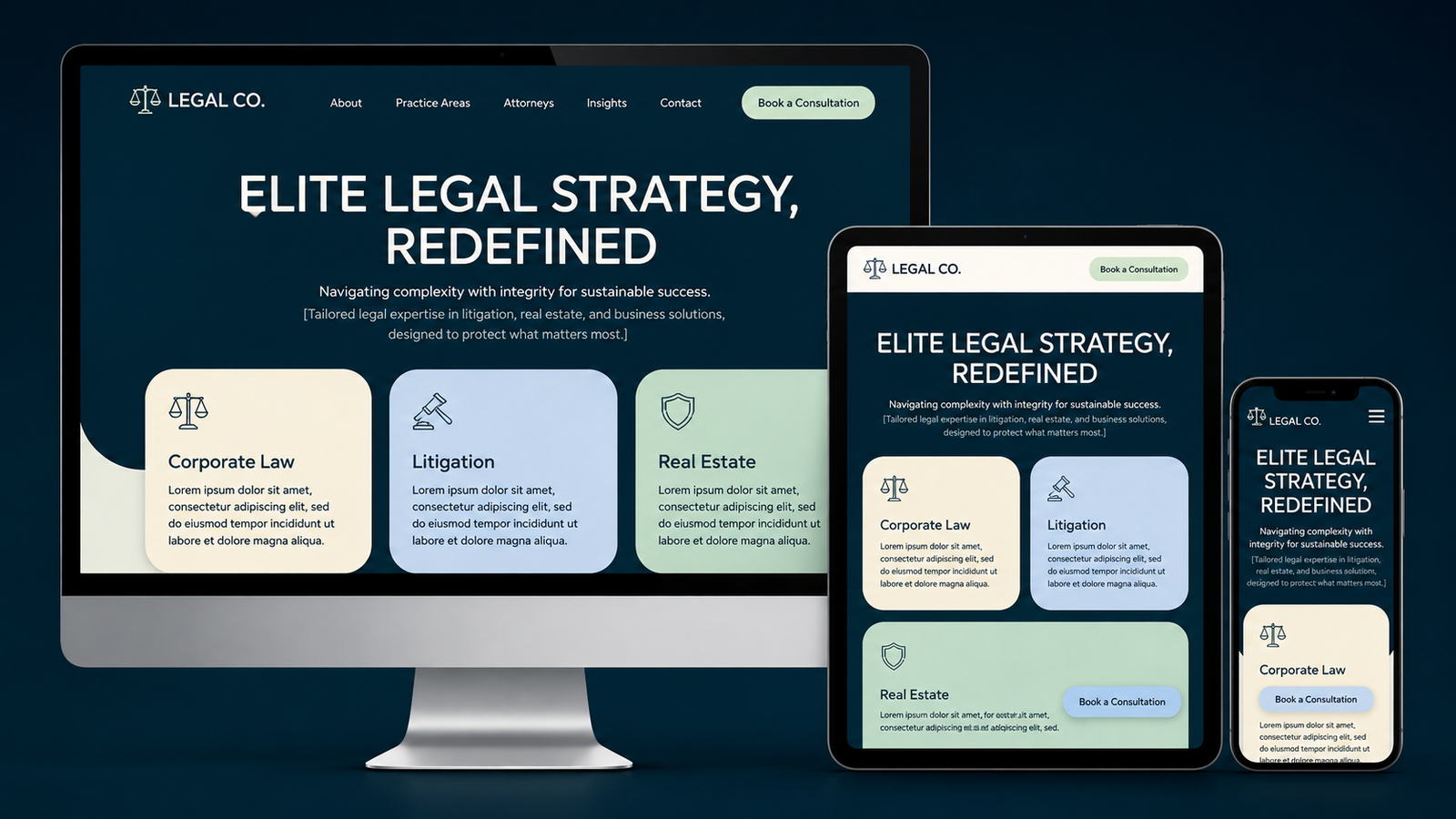
A modern law-firm website should help the right visitor understand the firm, identify the relevant service, evaluate the people behind the practice and take an appropriate next step. Design matters, but structure, clarity, credibility and technical performance determine whether the website works as a business asset.
Build navigation and page architecture around client needs rather than internal firm terminology.
Use lawyer profiles, service evidence, research and professional transparency to support credibility.
Make important pages accessible to search engines, AI systems and prospective clients.
Create visible, appropriate pathways from information to enquiry without over-selling.
A website may look polished while still hiding important services, weakening lawyer profiles, duplicating content, confusing navigation or making enquiry unnecessarily difficult. Effective improvement begins by diagnosing the architecture before changing colours, layouts or individual pages.
Where the firm is planning a redesign, adding practices, entering new markets or struggling with visibility, a structured review can identify the highest-impact changes across architecture, content, search, profiles, technical performance and intake.
Last updated: July 31, 2026
What a law-firm website is expected to do is a core part of law firm websites. For law firms, the practical value comes from connecting this area to the firm's wider website, content, search, technology and client-service system.
The priority is to define the purpose, audience, ownership and evidence required for this area before adding more pages, tools or automation. A clear structure reduces duplication, improves accountability and makes future improvement easier to measure.
Strategy before visual design is a core part of law firm websites. For law firms, the practical value comes from connecting this area to the firm's wider website, content, search, technology and client-service system.
The priority is to define the purpose, audience, ownership and evidence required for this area before adding more pages, tools or automation. A clear structure reduces duplication, improves accountability and makes future improvement easier to measure.
Information architecture and navigation is a core part of law firm websites. For law firms, the practical value comes from connecting this area to the firm's wider website, content, search, technology and client-service system.
The priority is to define the purpose, audience, ownership and evidence required for this area before adding more pages, tools or automation. A clear structure reduces duplication, improves accountability and makes future improvement easier to measure.
Homepage role is a core part of law firm websites. For law firms, the practical value comes from connecting this area to the firm's wider website, content, search, technology and client-service system.
The priority is to define the purpose, audience, ownership and evidence required for this area before adding more pages, tools or automation. A clear structure reduces duplication, improves accountability and makes future improvement easier to measure.
Practice and service pages is a core part of law firm websites. For law firms, the practical value comes from connecting this area to the firm's wider website, content, search, technology and client-service system.
The priority is to define the purpose, audience, ownership and evidence required for this area before adding more pages, tools or automation. A clear structure reduces duplication, improves accountability and makes future improvement easier to measure.
Lawyer profile pages is a core part of law firm websites. For law firms, the practical value comes from connecting this area to the firm's wider website, content, search, technology and client-service system.
The priority is to define the purpose, audience, ownership and evidence required for this area before adding more pages, tools or automation. A clear structure reduces duplication, improves accountability and makes future improvement easier to measure.
Location pages is a core part of law firm websites. For law firms, the practical value comes from connecting this area to the firm's wider website, content, search, technology and client-service system.
The priority is to define the purpose, audience, ownership and evidence required for this area before adding more pages, tools or automation. A clear structure reduces duplication, improves accountability and makes future improvement easier to measure.
Topic hubs, resources and insights is a core part of law firm websites. For law firms, the practical value comes from connecting this area to the firm's wider website, content, search, technology and client-service system.
The priority is to define the purpose, audience, ownership and evidence required for this area before adding more pages, tools or automation. A clear structure reduces duplication, improves accountability and makes future improvement easier to measure.
Trust and professional credibility is a core part of law firm websites. For law firms, the practical value comes from connecting this area to the firm's wider website, content, search, technology and client-service system.
The priority is to define the purpose, audience, ownership and evidence required for this area before adding more pages, tools or automation. A clear structure reduces duplication, improves accountability and makes future improvement easier to measure.
Technical performance and mobile usability is a core part of law firm websites. For law firms, the practical value comes from connecting this area to the firm's wider website, content, search, technology and client-service system.
The priority is to define the purpose, audience, ownership and evidence required for this area before adding more pages, tools or automation. A clear structure reduces duplication, improves accountability and makes future improvement easier to measure.
Accessibility is a core part of law firm websites. For law firms, the practical value comes from connecting this area to the firm's wider website, content, search, technology and client-service system.
The priority is to define the purpose, audience, ownership and evidence required for this area before adding more pages, tools or automation. A clear structure reduces duplication, improves accountability and makes future improvement easier to measure.
Conversion and intake pathways is a core part of law firm websites. For law firms, the practical value comes from connecting this area to the firm's wider website, content, search, technology and client-service system.
The priority is to define the purpose, audience, ownership and evidence required for this area before adding more pages, tools or automation. A clear structure reduces duplication, improves accountability and makes future improvement easier to measure.
Website redesign planning is a core part of law firm websites. For law firms, the practical value comes from connecting this area to the firm's wider website, content, search, technology and client-service system.
The priority is to define the purpose, audience, ownership and evidence required for this area before adding more pages, tools or automation. A clear structure reduces duplication, improves accountability and makes future improvement easier to measure.
Measurement and continuous improvement is a core part of law firm websites. For law firms, the practical value comes from connecting this area to the firm's wider website, content, search, technology and client-service system.
The priority is to define the purpose, audience, ownership and evidence required for this area before adding more pages, tools or automation. A clear structure reduces duplication, improves accountability and makes future improvement easier to measure.
Law firm websites includes the strategic, technical, content, operational and measurement elements needed to improve how a law firm is understood, discovered and evaluated.
It matters because weaknesses in law firm websites can reduce visibility, trust, usability and the quality of client enquiries even where the firm has strong offline expertise.
Common mistakes include unclear page ownership, duplicated content, unsupported claims, weak internal linking, poor technical implementation and treating isolated tactics as a complete strategy.
A firm should first identify the highest-impact structural gaps, then sequence improvements according to risk, business value, implementation effort and dependency.
Specialist support may be useful when the firm is planning a major redesign, expanding into new markets, adopting new technology, restructuring content or facing persistent visibility and conversion problems.
Explain when a firm may need a structured website-strategy review rather than piecemeal design changes.
Additional context on legal technology, search visibility, AI discovery and digital growth for law firms.