Align Stakeholders
Document objectives, audiences, decision-makers, approvals and project scope in one place.

A structured project template for defining the business, content, technical, intake, migration and launch requirements of a law firm website.
Save or follow this source
Add AdvocateRahulDev.com to Google Preferred Sources or open this page in your preferred AI tool.
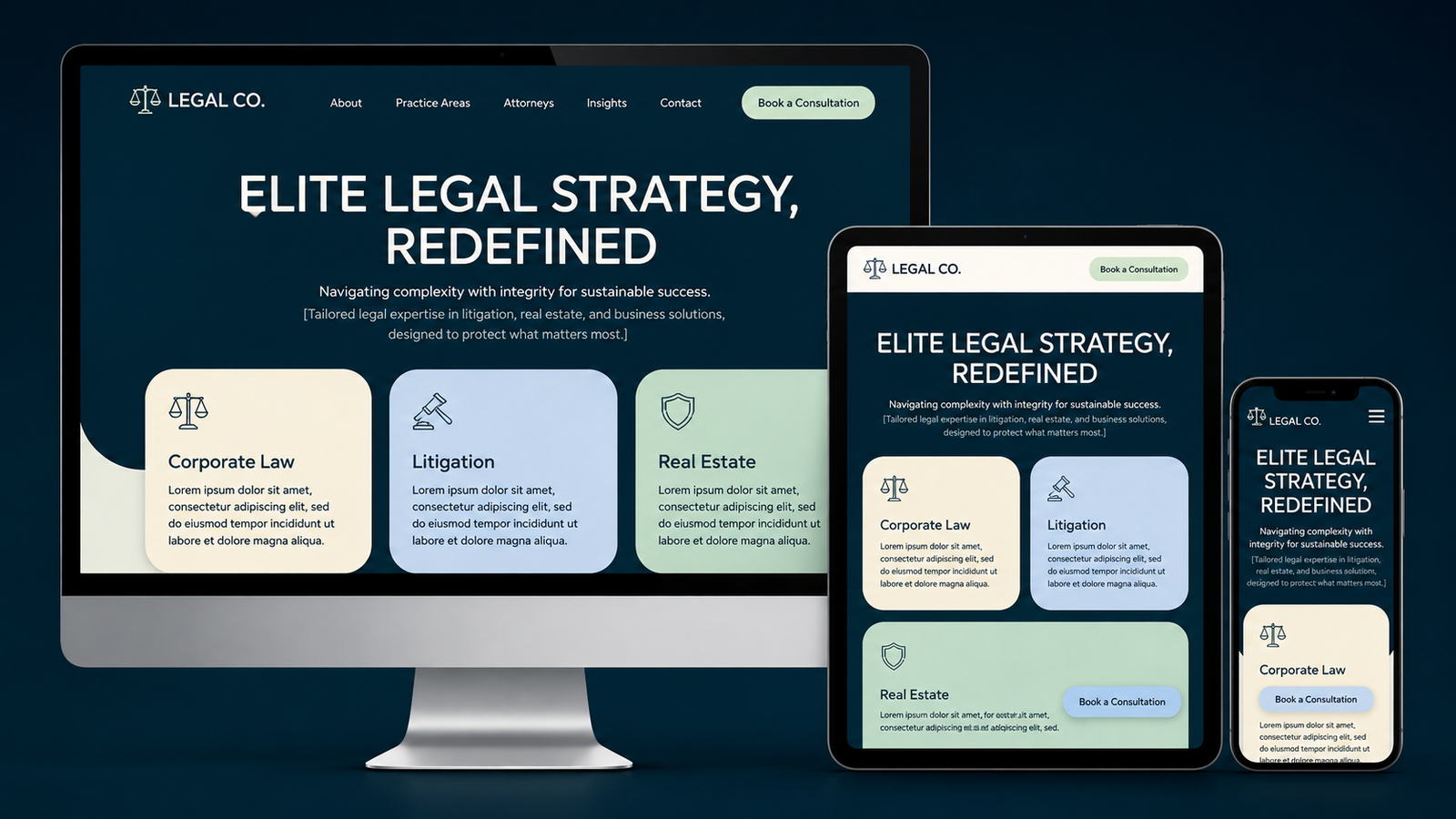
Law-firm website projects become expensive when business goals, architecture, content ownership, intake requirements and migration decisions are left unresolved. This template creates a shared planning foundation before production starts.
Document objectives, audiences, decision-makers, approvals and project scope in one place.
Define service pages, lawyer profiles, locations, topics, resources, insights and governance pages.
Decide what to retain, merge, remove, redirect or rewrite before legacy content is moved.
Set requirements for accessibility, SEO, forms, privacy, analytics, QA and post-launch monitoring.
The template connects business goals, positioning, architecture, content, technical requirements, intake, privacy, migration, launch QA and ongoing management.
The requirement has been agreed and documented.
The issue is recognised but requires an owner or approval.
The issue is relevant but has not been addressed.
The requirement does not apply to the current project.
Required before architecture, content production or development is finalised.
Materially improves authority, usability, scalability or client experience.
Can be scheduled after launch or during later expansion.
The framework supports planning and prioritisation only. It is not a predictive score.
Once the requirements are documented, a website strategy review can test the proposed architecture, identify missing dependencies and sequence content, design, development and migration work.
Assign an owner and decision status to every section. Keep confirmed requirements separate from assumptions, future ideas and items that still require approval.
Last updated: August 2, 2026
The requirement has been agreed and documented.
The issue is recognised but requires an owner or approval.
The issue is relevant but has not been addressed.
The requirement does not apply to the current project.
Required before architecture, content production or development is finalised.
Materially improves authority, usability, scalability or client experience.
Can be scheduled after launch or during later expansion.
Define and approve the following requirements before the corresponding design, content, development or migration work is finalised.
| Planning field | Response prompt |
|---|---|
| Primary business objective | Decision, owner, evidence, dependency and approval status |
| Target client groups | Decision, owner, evidence, dependency and approval status |
| Priority practices and sectors | Decision, owner, evidence, dependency and approval status |
| Priority jurisdictions and geographic markets | Decision, owner, evidence, dependency and approval status |
| New market or service expansion | Decision, owner, evidence, dependency and approval status |
| Project type: new build, redesign, migration or expansion | Decision, owner, evidence, dependency and approval status |
| Decision-makers and approval owners | Decision, owner, evidence, dependency and approval status |
| Target launch window | Decision, owner, evidence, dependency and approval status |
Define and approve the following requirements before the corresponding design, content, development or migration work is finalised.
| Planning field | Response prompt |
|---|---|
| Firm positioning statement | Decision, owner, evidence, dependency and approval status |
| Core value proposition | Decision, owner, evidence, dependency and approval status |
| Credible differentiators | Decision, owner, evidence, dependency and approval status |
| Tone of voice | Decision, owner, evidence, dependency and approval status |
| Visual identity requirements | Decision, owner, evidence, dependency and approval status |
| Claims and credentials requiring verification | Decision, owner, evidence, dependency and approval status |
| Relationship between firm brand and lawyer profiles | Decision, owner, evidence, dependency and approval status |
Define and approve the following requirements before the corresponding design, content, development or migration work is finalised.
| Planning field | Response prompt |
|---|---|
| Homepage | Decision, owner, evidence, dependency and approval status |
| Solutions or service hub | Decision, owner, evidence, dependency and approval status |
| Practice and service pages | Decision, owner, evidence, dependency and approval status |
| Lawyer profiles | Decision, owner, evidence, dependency and approval status |
| Location pages | Decision, owner, evidence, dependency and approval status |
| Topic hubs | Decision, owner, evidence, dependency and approval status |
| Resources | Decision, owner, evidence, dependency and approval status |
| Insights | Decision, owner, evidence, dependency and approval status |
| About and contact | Decision, owner, evidence, dependency and approval status |
| Editorial, research, privacy, terms and disclaimer pages | Decision, owner, evidence, dependency and approval status |
Define and approve the following requirements before the corresponding design, content, development or migration work is finalised.
| Planning field | Response prompt |
|---|---|
| Existing pages to retain | Decision, owner, evidence, dependency and approval status |
| Pages to merge | Decision, owner, evidence, dependency and approval status |
| Pages to remove | Decision, owner, evidence, dependency and approval status |
| Pages requiring substantive revision | Decision, owner, evidence, dependency and approval status |
| New pages required | Decision, owner, evidence, dependency and approval status |
| Redirect map | Decision, owner, evidence, dependency and approval status |
| Canonical URL decisions | Decision, owner, evidence, dependency and approval status |
| Image and document migration | Decision, owner, evidence, dependency and approval status |
| Legacy metadata review | Decision, owner, evidence, dependency and approval status |
Define and approve the following requirements before the corresponding design, content, development or migration work is finalised.
| Planning field | Response prompt |
|---|---|
| Priority service-page briefs | Decision, owner, evidence, dependency and approval status |
| Client questions and decision points | Decision, owner, evidence, dependency and approval status |
| Lawyer biography structure | Decision, owner, evidence, dependency and approval status |
| Qualifications and credentials | Decision, owner, evidence, dependency and approval status |
| Relevant representative experience | Decision, owner, evidence, dependency and approval status |
| Authored content and topic relationships | Decision, owner, evidence, dependency and approval status |
| Contact and consultation pathways | Decision, owner, evidence, dependency and approval status |
Define and approve the following requirements before the corresponding design, content, development or migration work is finalised.
| Planning field | Response prompt |
|---|---|
| Research standards | Decision, owner, evidence, dependency and approval status |
| Source hierarchy | Decision, owner, evidence, dependency and approval status |
| Author and reviewer roles | Decision, owner, evidence, dependency and approval status |
| AI-assisted content controls | Decision, owner, evidence, dependency and approval status |
| Content approval process | Decision, owner, evidence, dependency and approval status |
| Editorial calendar | Decision, owner, evidence, dependency and approval status |
| Update and correction process | Decision, owner, evidence, dependency and approval status |
| Internal-link ownership | Decision, owner, evidence, dependency and approval status |
Define and approve the following requirements before the corresponding design, content, development or migration work is finalised.
| Planning field | Response prompt |
|---|---|
| Hosting and deployment method | Decision, owner, evidence, dependency and approval status |
| CMS or static-site architecture | Decision, owner, evidence, dependency and approval status |
| Mobile requirements | Decision, owner, evidence, dependency and approval status |
| Accessibility requirements | Decision, owner, evidence, dependency and approval status |
| Page-speed and asset strategy | Decision, owner, evidence, dependency and approval status |
| Metadata and canonical rules | Decision, owner, evidence, dependency and approval status |
| Structured data | Decision, owner, evidence, dependency and approval status |
| XML sitemap | Decision, owner, evidence, dependency and approval status |
| Robots controls | Decision, owner, evidence, dependency and approval status |
| Search Console and Bing Webmaster setup | Decision, owner, evidence, dependency and approval status |
Define and approve the following requirements before the corresponding design, content, development or migration work is finalised.
| Planning field | Response prompt |
|---|---|
| Contact options | Decision, owner, evidence, dependency and approval status |
| Form fields | Decision, owner, evidence, dependency and approval status |
| Confidentiality warning | Decision, owner, evidence, dependency and approval status |
| Consultation booking | Decision, owner, evidence, dependency and approval status |
| Data destination | Decision, owner, evidence, dependency and approval status |
| CRM or matter-management integration | Decision, owner, evidence, dependency and approval status |
| Response ownership | Decision, owner, evidence, dependency and approval status |
| Cookie, analytics and privacy disclosures | Decision, owner, evidence, dependency and approval status |
| Retention and security requirements | Decision, owner, evidence, dependency and approval status |
Define and approve the following requirements before the corresponding design, content, development or migration work is finalised.
| Planning field | Response prompt |
|---|---|
| Content and legal review | Decision, owner, evidence, dependency and approval status |
| Metadata review | Decision, owner, evidence, dependency and approval status |
| Canonical verification | Decision, owner, evidence, dependency and approval status |
| Redirect testing | Decision, owner, evidence, dependency and approval status |
| Broken-link testing | Decision, owner, evidence, dependency and approval status |
| Mobile and accessibility review | Decision, owner, evidence, dependency and approval status |
| Form testing | Decision, owner, evidence, dependency and approval status |
| Structured-data validation | Decision, owner, evidence, dependency and approval status |
| Sitemap deployment | Decision, owner, evidence, dependency and approval status |
| Indexation controls | Decision, owner, evidence, dependency and approval status |
| Analytics and monitoring | Decision, owner, evidence, dependency and approval status |
Define and approve the following requirements before the corresponding design, content, development or migration work is finalised.
| Planning field | Response prompt |
|---|---|
| Indexation monitoring | Decision, owner, evidence, dependency and approval status |
| Search performance review | Decision, owner, evidence, dependency and approval status |
| Content update calendar | Decision, owner, evidence, dependency and approval status |
| Broken-link checks | Decision, owner, evidence, dependency and approval status |
| Conversion and intake review | Decision, owner, evidence, dependency and approval status |
| Security and backup checks | Decision, owner, evidence, dependency and approval status |
| New practice and market expansion process | Decision, owner, evidence, dependency and approval status |
| Quarterly architecture review | Decision, owner, evidence, dependency and approval status |
These external examples illustrate different approaches to specialist legal positioning, research, directories and structured legal content.
Treat this as a warning against unsupported assumptions, mechanical implementation or claims that exceed what the resource can establish.
Treat this as a warning against unsupported assumptions, mechanical implementation or claims that exceed what the resource can establish.
Treat this as a warning against unsupported assumptions, mechanical implementation or claims that exceed what the resource can establish.
Treat this as a warning against unsupported assumptions, mechanical implementation or claims that exceed what the resource can establish.
Treat this as a warning against unsupported assumptions, mechanical implementation or claims that exceed what the resource can establish.
Treat this as a warning against unsupported assumptions, mechanical implementation or claims that exceed what the resource can establish.
This resource is an educational planning and assessment framework. It is based on current search, content, local-visibility and website-planning principles together with contextual examples from specialist legal and research platforms. It does not replace a technical audit, legal review, privacy review, accessibility assessment or professional implementation plan.
Complete it before design and development decisions are finalised, assign an owner to every section and separate confirmed requirements from assumptions.
No. Some requirements may not apply to a small firm or a narrowly scoped project, but exclusions should be deliberate rather than accidental.
Priorities should reflect dependency. Business goals, architecture, migration, privacy, intake, SEO and launch controls generally come before optional enhancements.
No. A complete template reduces ambiguity and risk, but it cannot guarantee traffic, enquiries, accessibility compliance or project success.
Specialist support is useful when architecture, migration, search visibility, content production, intake, privacy or multi-market expansion requires coordinated planning.
Use the completed resource to identify the most important unresolved gaps, then move into a focused review or implementation plan.
Additional context on legal technology, search visibility, AI discovery and digital growth for law firms.