Website and Architecture Decisions
Ensure structural decisions support content and SEO plans rather than requiring later rework.

Coordinate websites, content, AI readiness, search, and technology decisions into one operating plan instead of disconnected projects.
Save or follow this source
Add AdvocateRahulDev.com to Google Preferred Sources or open this page in your preferred AI tool.
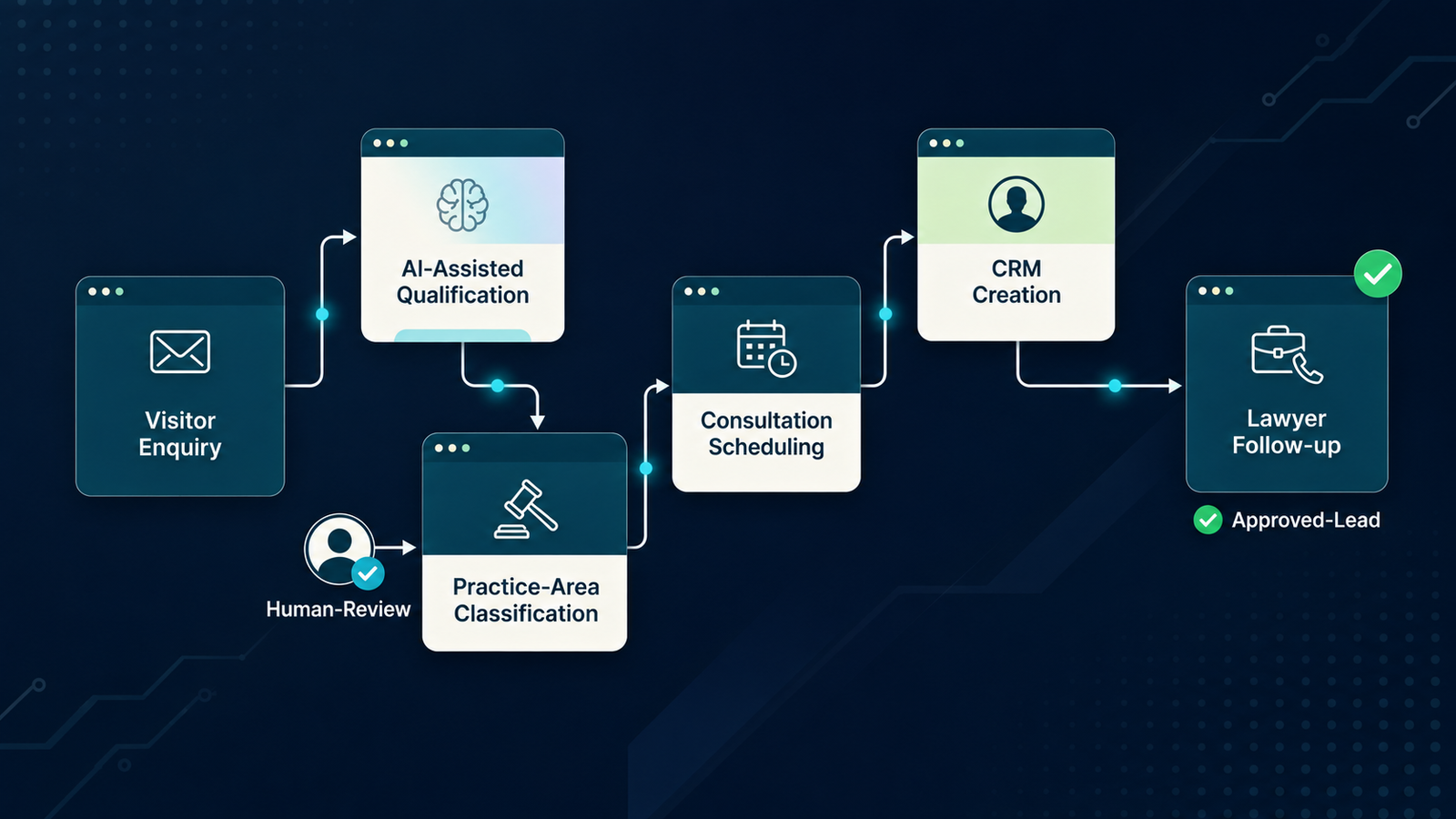

Many firms accumulate a website agency, an SEO vendor, a content writer, and various software tools over time, each solving a narrow problem without reference to the others. The result is often inconsistent priorities, duplicated effort, and no single view of what's actually working across the firm's digital presence.
Ensure structural decisions support content and SEO plans rather than requiring later rework.
Connect keyword strategy, content planning, and internal linking into one coherent system.
Bring entity clarity and structural consistency into the same plan as SEO and content work, rather than treating it separately.
Define priorities, dependencies, and review points across existing tools and vendors instead of adding new ones without a plan.
Several parties are already involved, but no one is coordinating priorities across them.
Growth introduces complexity that a single project-based engagement won't address.
The review identified multiple interdependent gaps that benefit from a coordinated sequence rather than isolated fixes.
| Single-Service Engagement | Digital Growth Advisory |
|---|---|
| Solves one defined problem in isolation | Coordinates multiple interdependent workstreams |
| Vendors work independently | Priorities and dependencies are defined across vendors |
| Scope is fixed at the outset | Scope can expand where evidence supports it |
| Best when the problem is already clear | Best when the firm needs the problem sequenced first |
Last updated: July 31, 2026
Digital growth advisory exists for firms that already have multiple vendors, tools, or internal workstreams in motion but lack a single plan coordinating them. Rather than treating website, SEO, content, and AI readiness as separate campaigns, the advisory role defines priorities, dependencies, and review points across all of them.
Direct answer: Digital growth advisory coordinates a law firm's website, SEO, AI visibility, content, and technology decisions into one operating plan, so that separate vendors, tools, and campaigns work toward the same priorities instead of functioning as disconnected projects.
A law firm may have a website agency, an SEO consultant, a content writer, and various pieces of software, each optimising for a narrow goal without visibility into what the others are doing. Individually, each vendor's work might be competent. Collectively, the lack of coordination can create friction: a website restructure invalidates an SEO consultant's keyword mapping, a content plan is built without knowing what the website's architecture can support, and no one has a consolidated view of what's actually moving the needle.
This isn't necessarily a failure of any single vendor. It's a structural gap — no one has been tasked with defining how the pieces should fit together.
Digital growth advisory typically addresses four interlocking areas.
Website and architecture decisions, ensuring structural choices support the content and SEO plans rather than requiring rework later.
SEO and content alignment, connecting keyword strategy, content planning, and internal linking so they reinforce rather than duplicate each other.
AI readiness, bringing entity clarity and structural consistency into the same plan as SEO and content work rather than treating it as a separate initiative.
Technology and vendor coordination, defining priorities, dependencies, and review points across the tools and vendors the firm already has, rather than adding new ones without a plan.
The advisory role does not necessarily replace any individual vendor or workstream. It defines how they relate to each other and in what sequence they should be addressed.
Advisory work tends to be most useful for firms already managing multiple vendors or internal teams without a coordinating plan, firms expanding across new markets or offices where complexity is increasing, and firms that have completed a visibility review and identified multiple interdependent gaps that benefit from a coordinated sequence rather than isolated fixes.
Firms with a single, clearly defined problem — such as a website rebuild or an SEO gap — are often better served starting with the relevant single-service solution rather than a broader advisory engagement.
Dr. Rahul Dev's advisory work draws on a wider set of platforms he has built and authored across law firm visibility, legal technology intelligence, and patent research. Councl provides structured, public-facing law firm visibility and directory data, scoring firms on reputation, web presence, experience, and reliability. TechCorpLegal tracks legal technology tools and technology-law developments across multiple jurisdictions.
These platforms are separate from the bespoke advisory work provided through AdvocateRahulDev.com and should not be presented as independent third-party validation of that work. They are referenced here because the underlying research discipline and subject-matter expertise carry across all of them.
Advisory tends to be the right fit when a firm already has multiple vendors or workstreams that need coordinating, rather than a single, clearly defined problem that one service can address directly.
An agency typically executes specific deliverables. Advisory work focuses on defining priorities, dependencies, and standards across existing vendors and workstreams, and can operate alongside agencies rather than replacing them.
It involves clarifying which decisions depend on which other decisions, setting shared priorities, and establishing review points so that separate workstreams reinforce rather than conflict with each other.
Smaller firms with fewer moving parts may not need this level of coordination. It tends to become more valuable as the number of vendors, tools, and workstreams increases.
A visibility review often identifies the gaps that advisory work then sequences and coordinates. The review diagnoses the current position; advisory work addresses how to act on multiple findings together.
Additional context on legal technology, search visibility, AI discovery and digital growth for law firms.
A focused review can clarify whether the firm's current gaps are better addressed by a single service or by a coordinated advisory engagement.