Entity Clarity
Consistent, unambiguous information about who the firm is, what it does, and who its lawyers are — repeated accurately across the site and external profiles.

Make the firm's expertise clearer and more consistently structured for AI-driven discovery, without relying on unsupported promises.
Save or follow this source
Add AdvocateRahulDev.com to Google Preferred Sources or open this page in your preferred AI tool.
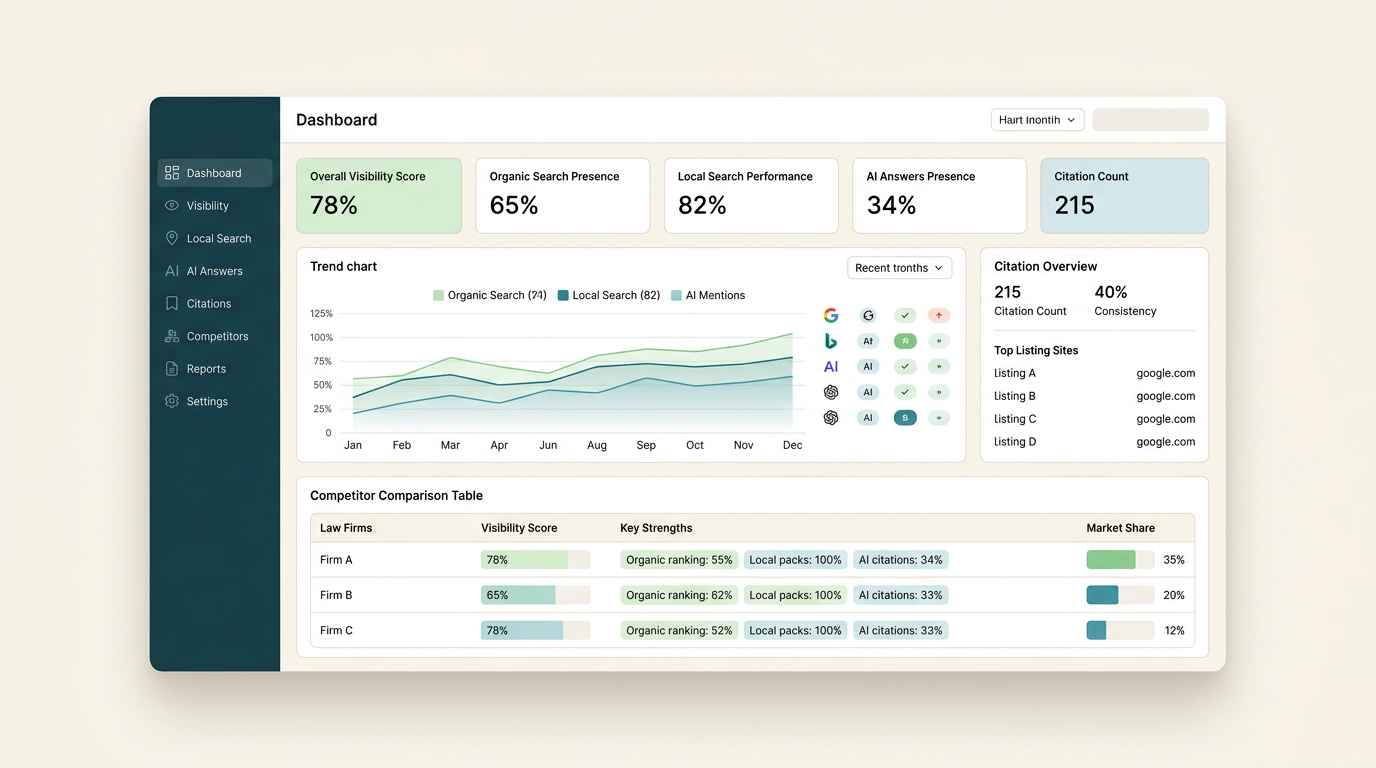

AI assistants and AI-generated search summaries are becoming part of how prospective clients research legal services before they ever visit a website directly. Firms whose information is inconsistent, thin, or difficult to interpret risk being harder for these systems to reference accurately — not because of a technical trick they're missing, but because their underlying information isn't clear enough to work with.
Consistent, unambiguous information about who the firm is, what it does, and who its lawyers are — repeated accurately across the site and external profiles.
Content structured to answer specific questions plainly, rather than requiring inference from long, unfocused paragraphs.
Visible, consistent author identity connected to genuine expertise and experience.
Logical headings, clean internal linking, and content organised so both readers and machines can follow the relationship between ideas.
Evidence-based claims supported by credible references rather than vague or unverifiable statements.
AI visibility builds on existing SEO and content work — it isn't a substitute for either.
The firm wants to understand and prepare for how AI-assisted search is changing discovery, without chasing unproven tactics.
Names, credentials, or service descriptions vary across the website, directories, and professional profiles.
This work does not guarantee that any AI system will cite, mention, or recommend the firm. AI platforms control what they retrieve, summarise, and display, and outcomes vary by platform, query, and competitive landscape. Google has been explicit that AI-driven features like AI Overviews and AI Mode use the same core ranking and quality systems as standard Search — there is no separate technical shortcut, and files sometimes suggested for "AI optimisation," such as llms.txt, are not used by Google Search at all. The realistic goal is clarity and consistency, not guaranteed visibility in any specific AI result.
Last updated: July 31, 2026
AI-driven discovery is changing how prospective clients research legal services, but the underlying requirement is not a separate set of technical tricks. It is clarity: consistent entity information, direct answers, visible authorship, and evidence-based content that AI systems can interpret accurately. Google's own guidance confirms that AI-driven search features rely on the same core ranking and quality systems as traditional search, which means AI visibility work builds on existing SEO and content foundations rather than replacing them.
Direct answer: AI visibility for law firms depends on whether a firm's information is clear, structured, and evidence-based enough for AI systems to interpret accurately, not on special "AI SEO" tactics, since Google has confirmed AI-driven search features run on the same underlying ranking systems as standard search.
"AI visibility" has become a popular term, and it's sometimes marketed as a distinct discipline with its own secret techniques. In practice, the substance behind it is far more grounded: it concerns whether a law firm's expertise, services, and credentials are described clearly enough, consistently enough, and with enough supporting evidence for an AI system to interpret and summarise accurately.
This isn't a claim that any firm can guarantee being mentioned or recommended by an AI assistant. It's a description of the conditions that make accurate interpretation more likely: unambiguous entity information, direct answers to common questions, and content that doesn't require inference to understand what the firm actually does.
AI systems, like search engines, benefit from consistent signals about who a firm is, who its lawyers are, and how those entities relate to each other and to the services offered. Inconsistent information — a lawyer's title stated differently across the website and a professional directory, or a service described in conflicting terms on different pages — creates ambiguity that works against clear interpretation.
Practical entity clarity work includes aligning author and lawyer information across the website and external profiles, maintaining consistent service descriptions, and ensuring the relationships between the firm, its people, and its practice areas are stated plainly rather than left implicit.
A common misconception treats AI visibility as separate from, or in competition with, traditional SEO. Google's guidance on generative AI features in Search states plainly that these features run on the same core ranking and quality systems as standard Search results. There is no parallel system built exclusively for AI-generated answers, and no special technical file — including the sometimes-suggested llms.txt — that Google Search actually uses; Google has confirmed it is ignored.
This means AI visibility work is best understood as an extension of sound SEO and content practice, not a replacement for it. A page with weak technical foundations or thin content is unlikely to serve AI-driven discovery well, regardless of how it is otherwise optimised.
It's worth stating plainly what this work does not promise. No one — including any specific technical approach — can guarantee that an AI assistant will cite, mention, or recommend a given law firm. AI platforms determine independently what they retrieve, how they summarise it, and what they choose to display, and this varies by platform, by query, and by the competitive landscape at any given time.
The realistic goal of AI visibility work is to make a firm's information clearer and more consistent, improving the conditions for accurate interpretation, without promising a specific outcome in any AI-generated result.
Not fundamentally. Google has confirmed AI-driven search features use the same core ranking and quality systems as standard Search, so AI visibility work builds on sound SEO and content foundations rather than replacing them.
No. Google has stated directly that Google Search ignores llms.txt files, so this is not a requirement for AI search visibility on Google.
This depends on the specific AI platform and is not fully controllable by any website owner. Clear, consistent, and well-evidenced information improves the conditions for accurate interpretation, but no outcome can be guaranteed.
Entity clarity refers to consistent, unambiguous information about who the firm is, who its lawyers are, and how services relate to those people. It matters because inconsistency creates ambiguity that works against accurate interpretation by AI systems.
A firm can improve the clarity, consistency, and evidence behind its information, which may improve the conditions for accurate interpretation. No approach can guarantee a specific mention or recommendation, since AI platforms control what they retrieve and display.
Additional context on legal technology, search visibility, AI discovery and digital growth for law firms.
A focused review can identify where entity information is inconsistent or where content lacks the clarity AI-driven discovery depends on.